ROP & Pediatric Retina Care
- Home
- ROP & Pediatric Retina Care
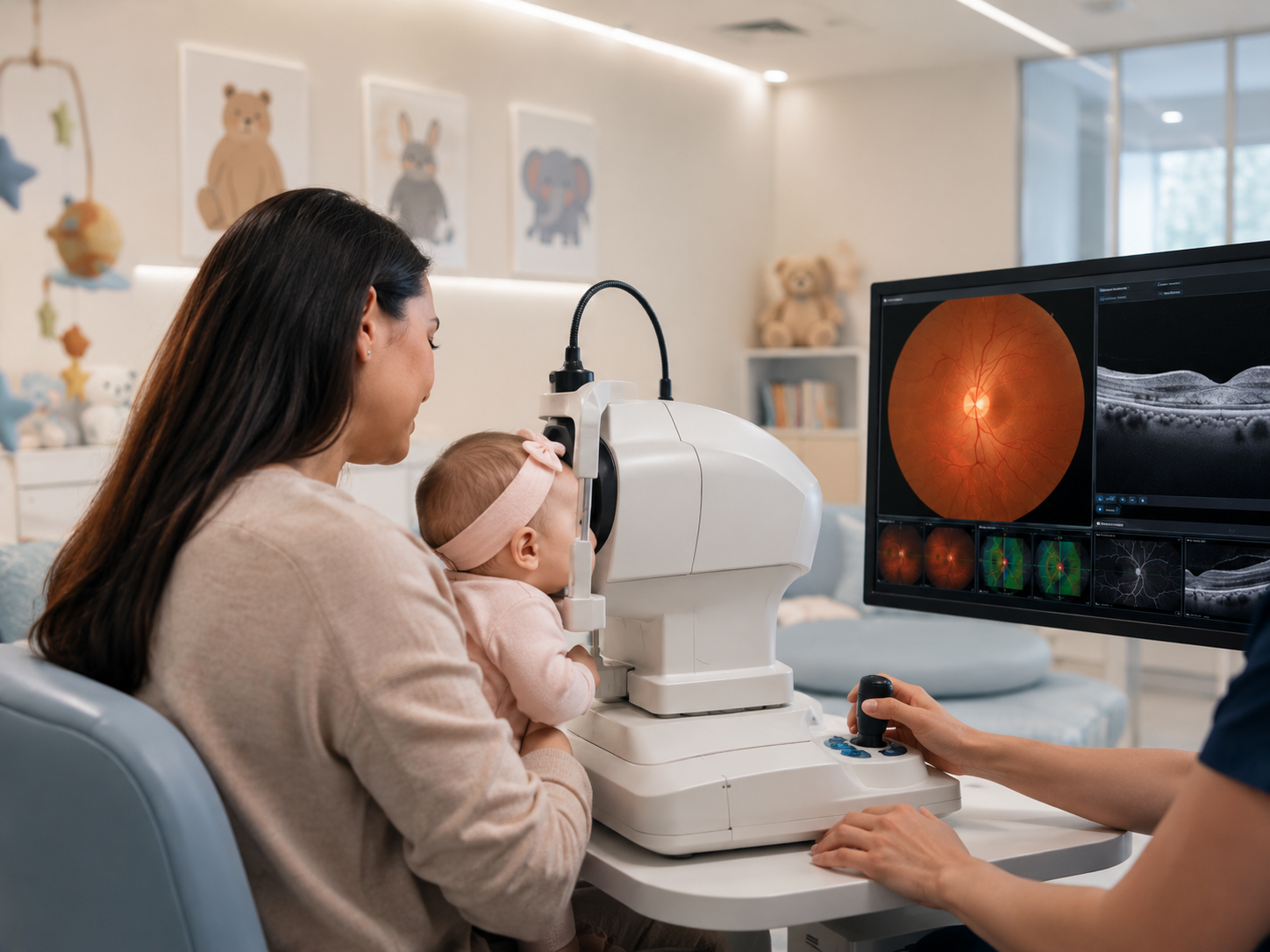
Retina screening support for premature babies and selected child eye risks.
Retinopathy of prematurity, known as ROP, is a retinal condition that can affect some premature babies. Timely screening is important because early detection can help prevent serious vision complications.
Overview
ROP occurs when abnormal blood vessels develop in the retina of premature babies. The risk is higher in babies born very early or with low birth weight. If serious ROP is not detected and treated on time, it may lead to retinal detachment and vision loss.
Dr. Md. Mominul Islam provides specialist support for ROP screening and selected pediatric retina concerns. His care focuses on timely examination, risk-based follow-up, parental counseling and coordination with neonatal or pediatric teams when needed.
Key Concerns
- Premature birth history
- Low birth weight
- NICU admission
- Oxygen therapy history
- Delayed ROP screening
- Family concern about vision
Diagnosis & Evaluation
ROP screening involves careful examination of the baby’s retina. The timing of screening depends on gestational age, birth weight and neonatal risk factors.
For pediatric retina concerns, evaluation may include clinical examination, retinal imaging where possible and follow-up planning based on the child’s age, cooperation and eye condition.
Treatment & Care Options
ROP care may include monitoring, laser treatment, intravitreal injection planning, surgery or referral depending on disease stage and severity. Many babies need repeated follow-up until the retina becomes stable.
Dr. Mominul helps parents understand screening timing, disease stage, treatment need and the importance of not missing follow-up visits.
Dr. Mominul’s Approach
- Timely ROP screening guidance
- Risk-based follow-up planning
- Parent counseling and education
- Coordination with neonatal teams
- Pediatric retina review when needed
FAQs
Which babies need ROP screening?
Premature babies, especially those with low birth weight or NICU history, may need ROP screening as advised by the neonatal team.
Is ROP always dangerous?
Not always. Some cases improve with monitoring, but severe ROP can threaten vision if not detected and treated on time.
Can ROP be treated?
Yes. Treatment may include laser, injection or surgery depending on the stage and severity of the condition.
Why is follow-up so important?
ROP can change quickly. Missing follow-up may delay treatment and increase the risk of serious vision complications.
Need ROP or pediatric retina care?
Book a consultation with Dr. Md. Mominul Islam for ROP screening guidance, pediatric retina evaluation and follow-up planning. Timely screening can be very important for protecting a child’s future vision.
