Macular Disease Care
- Home
- Macular Disease Care
Specialist care for central vision, reading difficulty and distortion.
The macula is the central part of the retina responsible for sharp vision, reading, recognizing faces and seeing fine details. Macular disease can affect daily activities even when side vision remains normal.
Overview
Macular conditions may develop due to aging, diabetes, inflammation, retinal traction, macular hole, macular edema or blood vessel problems. Symptoms may appear gradually or suddenly and should not be ignored.
Dr. Md. Mominul Islam provides specialist assessment and treatment planning for macular disease, including diabetic macular edema, macular degeneration, macular hole, central vision distortion and other macula-related problems.
Key Symptoms
- Distorted central vision
- Difficulty reading small text
- Dark spot in central vision
- Straight lines appearing wavy
- Blurred central vision
- Trouble recognizing faces
Diagnosis & Evaluation
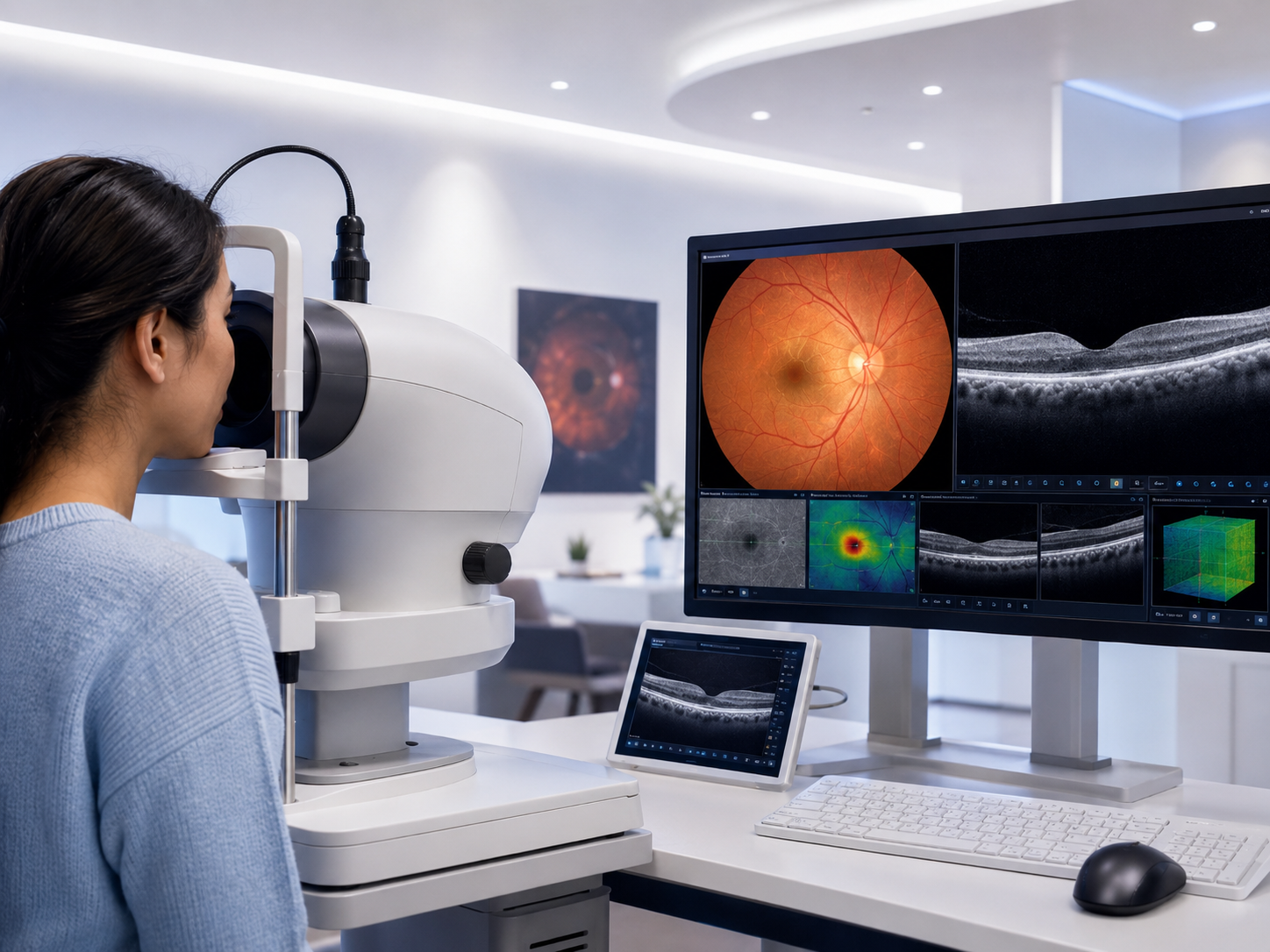
Evaluation usually includes visual acuity testing, dilated retina examination and macular imaging. OCT is commonly used to assess the macula in detail and identify swelling, hole, traction, thinning or other structural changes.
Depending on the condition, additional tests such as fundus photography or angiography may be advised to understand blood vessel leakage, bleeding or disease activity.
Treatment & Care Options
Care may include observation, medicine, intravitreal injection planning, laser treatment, retina surgery or long-term monitoring depending on diagnosis and severity.
Dr. Mominul explains the cause of central vision change, treatment options, follow-up needs and realistic expectations based on macular health and disease stage.
Dr. Mominul’s Approach
- OCT-guided macular evaluation
- Central vision risk assessment
- Diabetic macular edema review
- Macular hole treatment planning
- Long-term monitoring and guidance
FAQs
What is the macula?
The macula is the central part of the retina that helps with reading, face recognition and detailed vision.
Is distorted vision serious?
Distorted vision may indicate macular disease and should be checked by a retina specialist.
Can macular disease be treated?
Many macular conditions can be managed with injections, laser, surgery or monitoring depending on the diagnosis.
Why is OCT needed for macular disease?
OCT gives a detailed view of the macula and helps detect swelling, holes, traction and structural changes.
Need macular disease care?
Book a consultation with Dr. Md. Mominul Islam for specialist evaluation of central vision changes, distortion, macular edema, macular hole and other macula-related problems.
